
Bunkerspot ship.energy 2026 Annual Survey
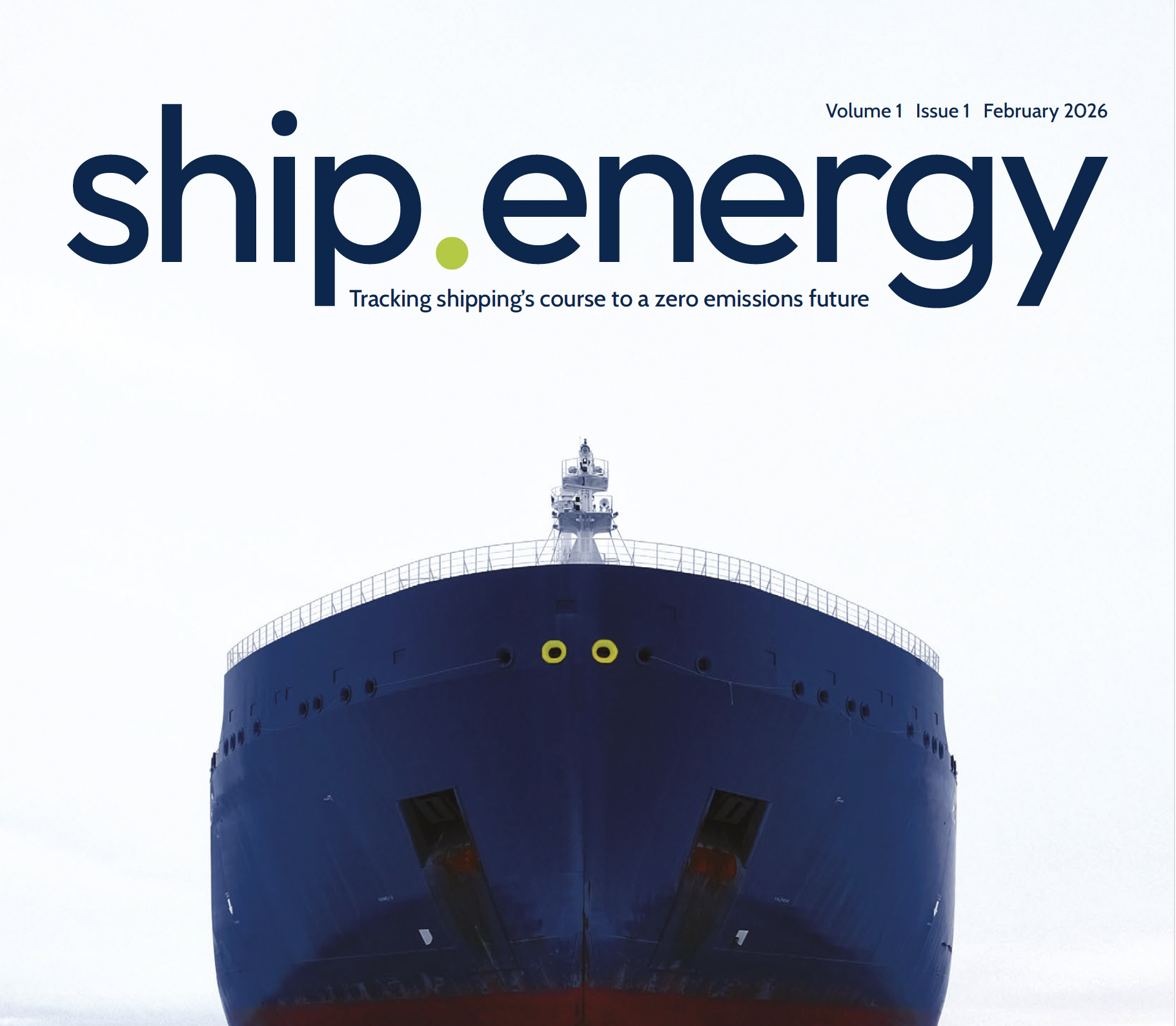
Tracking shipping’s course to a zero emissions future.
The 2026 ship.energy annual survey brought together perspectives from over 40 maritime decarbonisation leaders to assess where the industry stands after a turbulent 2025. Among the contributors are MARBEM Members: Clean Arctic Alliance, Pacific Environment, Equal Routes, NABU, Transport & Environment, and Opportunity Green. Read the higlights below.
-
When the International Maritime Organization's Marine Environment Protection Committee postponed the Net Zero Framework (NZF) vote in October 2025, reactions ranged from alarm to pragmatism. Dr. Sian Prior of the Clean Arctic Alliance voiced particular concern about regulatory uncertainty at a time when "decisive action on short-lived climate pollutants is urgently needed."
Her warning centred on a critical blind spot: without clear frameworks addressing black carbon and methane alongside CO₂, the industry risks making investment decisions that prolong reliance on high-emission fuels or swap one superpollutant for another. She emphasised that "progress through technical IMO committees…remains critical" and that "targeted fuel measures addressing superpollutants like black carbon can deliver near-term climate and health benefits, even while broader frameworks are under negotiation."
This insight reframes the NZF debate: the delay need not paralyse action on emissions reductions that deliver immediate co-benefits.
-
Andrew Dumbrille, Co-Director of Equal Routes, pushed the conversation further by insisting that shipping decarbonisation cannot be treated in isolation. He argued that "the delay of the IMO's NZF highlights the urgent need to consider shipping within the full climate-biodiversity-pollution shipping nexus. Every year of regulatory uncertainty risks locking the industry into fossil and methane-based fuels, with disproportionate impacts on Arctic communities, Small Island Developing States, and port populations already exposed to pollution."
Dumbrille called for the NZF to "integrate life-cycle emissions, short-lived climate pollutants, and safeguards for marine biodiversity, ensuring that the framework promotes a truly just and sustainable transition that addresses all aspects of the triple planetary crisis." His intervention highlights why MARBEM's evidence-based approach matters: shipping policy must serve not just carbon reduction targets, but the communities and ecosystems most vulnerable to both climate change and maritime pollution.
-
While much of the industry focuses on alternative fuels, Lukas Leppert (NABU) and Constance Dijkstra (T&E) reminded respondents that energy efficiency and operational measures remain underutilised tools for 2030 targets.
Leppert emphasised that "wind-propulsion will be an essential technology in the short and long term to reduce the energy requirements of shipping. Already today the technology allows ships to cut the costs of burning fuels while reducing their emissions." He also flagged the importance of robust accounting: "accurate emission factors are essential to depict the effect of short-term climate pollutants like methane. The absence of a global regulation increases the importance of European regulation."
For her part, Dijkstra called for individual countries to press ahead with their own legislation if the IMO stalls: "Having an international framework that provides clear decarbonisation targets with financial penalties is crucial to encourage ships to decarbonise. If such a framework was not approved, it would send the wrong signal to the shipping industry…But the IMO NZF should not be used to prevent countries from setting up their own legislation to accelerate the decarbonisation of ships, should they choose to do so."
-
One of the survey's most striking findings is the renewed scrutiny of liquefied natural gas—an area where MARBEM partners have led critical analysis. Dominika Leitane of Opportunity Green documented a significant regulatory moment: the UK's Advertising Standards Authority ruled that cruise ticket sellers had breached advertising rules by promoting LNG as "eco-friendly" or "the world's cleanest" marine fuel, noting that LNG was a fossil fuel with "potentially negative environmental impacts, such as methane slip and leakage."
This precedent is important: "rather than 'raising its game,' fossil LNG is facing higher scrutiny as an alternative or transition fuel." For MARBEM, this validates the importance of rigorous lifecycle analysis and transparent accounting of methane emissions—work that underpins advocacy for genuinely low-carbon pathways.
-
The survey reveals an industry at a crossroads. The NZF delay has created space—but also risk. As one respondent noted, "the transition will continue to be propelled by regional regulation, corporate targets and customer demand," yet "the key risk is not a loss of ambition, but a loss of coordination."
For MARBEM, the path forward is clear: amplify the voices calling for integrated climate-biodiversity-pollution approaches, support evidence-based scrutiny of fuel claims, and ensure that shipping's transition leaves no vulnerable community behind. The survey confirms that these aren't distractions from decarbonisation—they're essential to getting it right.