

Land-to-Sea:Why Shipping’s Fuel Choices MustFactor in Social and Health Impacts
Written by Elissama De Oliveira Menezes, Andrew Dumbrille, Melissa Lem, and Shweta Narayan
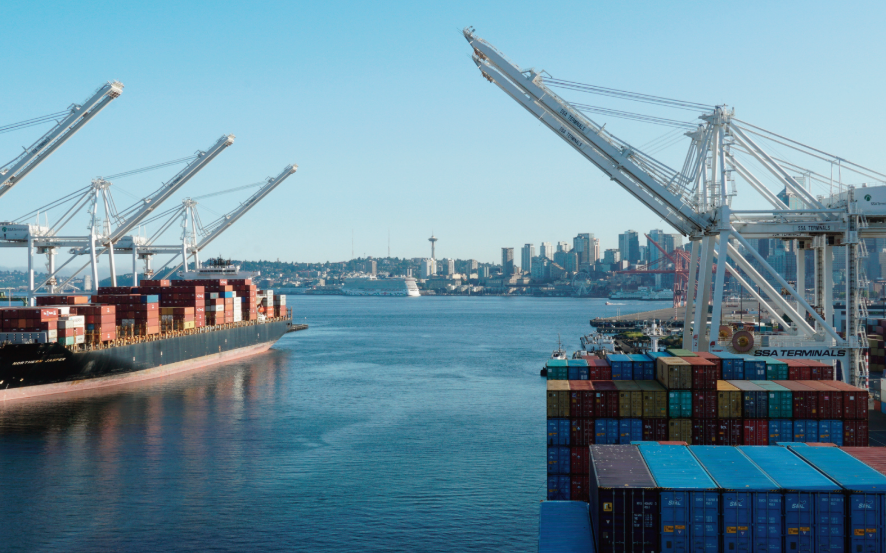
This article elaborates on the human health impacts of marine fuels through a methane-based fuels case study and suggests an approach in the context of the triple global planetary crisis.
Image Source: Shutterstock
As shipping decarbonizes, new marine fuels—like existing ones—come with a set of challenges, particularly for the communities where they are produced. These include land and water dispossession, food insecurity, pollution-related health issues, and ecosystem degradation—sometimes with little economic benefit for locals. While these impacts go beyond marine fuels, the maritime sector must take responsibility. With shipping set to expand, its role in emissions reduction and sustainability efforts is crucial. While the International Maritime Organization (IMO) refines its approach to marine fuel sustainability, key social, human health, and environmental risks remain overlooked, threatening to entrench existing inequalities. Prioritizing the protection of the most vulnerable from the climate, pollution, and biodiversity crises—and ensuring mitigation efforts do not reinforce extractive social and economic systems—must be central to this transition.
The IMO’s Marine Fuel Life-Cycle Assessment Framework
The IMO’s Life-Cycle Assessment (LCA) Framework initially prioritized emissions from fuel production and combustion, while largely overlooking social, economic, health, and environmental impacts. To address this, the 81st IMO’s Marine Environment Protection Committee (MEPC 81) established a Correspondence Group (CG), led by the United States, to refine the 2024 LCA Guidelines by assessing broader sustainability aspects of marine fuels.
Further Discussions on the LCA
Some progress has been made by the CG. Specifically, there was broad agreement on the production of sustainable marine fuels to: (1) respect formal and customary land and water use rights, including Indigenous and/or customary rights; (2) respect human and labor rights and contribute to social and economic development of local and rural communities; and (3) promote food security. All of these aspects are essential and important pieces of any comprehensive approach to sustainable fuel development and uptake.
Unfortunately, the outcomes from the CG overlooked critical social and environmental impacts. Key omissions include alignment with existing sustainability frameworks and declarations—such as the United Nations Sustainable Development Goals and the United Nations Declaration on the Rights of Indigenous Peoples—and a clear emphasis on the precautionary principle.
Additionally, the report does not adequately distinguish between land use and use rights and fails to account for people’s deep connections to places. It also neglects to ensure that, within the broader context of food security, Indigenous subsistence practices and non-economic harvesting remain undisturbed.
Additionally, the scope of discussions within the CG did not allow for dialogue and inclusion of aspects related to human health, particularly concerning the intersectionality of shipping within the triple planetary crisis and a complete understanding of the land-to-sea reality associated with the impacts of marine fuel production.
The Case of Methane and Biomethane
To understand why a broader assessment is needed, consider the case of methane-based fuels. Liquefied Natural Gas (LNG), which is largely methane, is often marketed as a “clean” alternative to traditional marine fuels. However, its production and use come with significant environmental and health consequences. Examining its impact provides a clear example of why the LCA framework must be comprehensive.
Methane is 82.5 times more potent than carbon dioxide over a 20-year period,¹ making its emissions a critical short-term climate threat. When in the atmosphere, photochemical reactions of methane lead to the production of tropospheric ozone, carbon dioxide, and stratospheric water vapor, all of which are also greenhouse gases (GHGs) and contribute directly to global warming.
Tropospheric ozone seriously threatens human health, particularly as a secondary pollutant formed from methane emissions. The 2022 Global Methane Assessment identified a direct, linear relationship between rising methane concentrations and increased tropospheric ozone levels. Exposure to ground-level ozone is linked to an estimated 1.04 to 1.23 million respiratory-related deaths annually among adults over 30.²
Elevated ozone levels can also cause significant respiratory distress, including coughing, throat irritation, chest pain, and reduced lung function.³ Those with pre-existing lung conditions—such as asthma, bronchitis, and emphysema—are especially vulnerable, as ozone exacerbates their symptoms and can trigger severe attacks. Prolonged or repeated exposure may lead to lasting lung tissue damage, increasing the risk of chronic respiratory diseases and long-term health complications. Additionally, emerging evidence⁴ suggests that ozone exposure is associated with a higher risk of various cardiovascular diseases. Beyond direct health effects, ground-level ozone also harms food productivity by damaging crops, increasing the risk of malnutrition and its associated health consequences.
The expansion of LNG to fuel marine vessels carries significant health risks that extend beyond methane’s role in climate change and air pollution. From extraction to processing, LNG exposes frontline communities to harmful pollutants, contaminates water sources, and strains under-resourced healthcare systems. Gas drilling releases nitrogen oxides, volatile organic compounds, benzene, heavy metals, and radioactive materials—substances linked to respiratory diseases, neurological damage, and increased cancer risks. Routine flaring further degrades air quality, while hydraulic fracturing introduces severe water contamination risks through chemical-laden fracking fluids and wastewater spills. Physicians have even cited health concerns as a reason for relocating their families and practices, further reducing access to medical care in affected areas.⁵
Beyond extraction and processing, LNG infrastructure—including coastal terminals, liquefaction plants, and shipping corridors—poses severe environmental and public health risks. Port expansions for LNG export and marine refueling disrupt coastal ecosystems, contributing to habitat destruction, land subsidence, and salinization of freshwater sources.⁶ These developments often lead to the displacement of fisherfolk and customary rights holders, severing their access to traditional livelihoods and food security. The erosion of these social and economic foundations increases stress and uncertainty, exacerbating mental health issues such as anxiety, depression, and eco-grief among affected populations.
Biomethane Poses Its Own Challenges
Biomethane is considered by some to be a stopgap solution for those currently using fossil LNG. Biomethane, or bio-LNG, is a limited resource constrained by the availability of truly sustainable feedstock, yet it remains under consideration as a fuel option for shipping.⁷ From production to combustion, the biomethane supply chain poses significant challenges, including inefficiencies, unintended knock-on effects, and potential lock-in to unsustainable practices. Without robust demand reduction measures and improved efficiency strategies, its use risks exacerbating—rather than solving—climate, environmental, health, and social issues.
The shipping industry’s expectations for biomethane availability as a decarbonization solution are overly optimistic. A comprehensive and cumulative environmental, health, and economic impact assessment is urgently needed—one that incorporates a food systems perspective, a life-cycle assessment of methane leakage, and a systematic review of its broader impacts. Only through an interdisciplinary approach can we fully understand the implications of biomethane use. Until then, it cannot be deemed a viable or sustainable solution for shipping’s energy transition.
The notion that biofuels, including biomethane, will drive down prices by addressing global waste issues and promoting a circular economy is misguided and greenwashed, perpetuating the ongoing use of fossil gas. In practice, the widespread adoption of biofuels is likely to result in price increases due to the limited availability of sustainable feedstocks. Studies, such as the one conducted by LR & UMAS in 2020,⁸ indicate that the costs of biofuels for the shipping industry are likely to rise over time, highlighting the importance of tempering expectations about their economic and environmental viability.
The Way Forward: An Intersectional Approach
An intersectional approach for marine fuels is essential to fully consider climate, environmental, socio-economic, health, and pollution impacts, thereby preventing unintended consequences. To this end, a shipping nexus concept was introduced to the marine community and IMO members.⁹ The concept situates shipping within the triple planetary crisis of climate change, biodiversity loss, and pollution and their ramifications on human health, and outlines solutions with co-benefits to address these crises.
In order to formalize this new approach, a new IMO framework could be developed—similar to its revised GHG strategy—and establish an Ad Hoc Working Group to advance its implementation. This group would support the ongoing development of LCA guidelines and bring much-needed attention to often-overlooked issues within IMO discussions, particularly the health impacts of shipping and its operational hazards, which extend far beyond coastal communities and affect populations worldwide.
Elissama De Oliveira Menezes (corresponding author) and Andrew Dumbrille are the Directors of Equal Routes, an organization working to build a decarbonized maritime industry focused on human rights, ocean health, and climate equity. Melissa Lem is a Clinical Assistant Professor at the University of British Columbia Faculty of Medicine and President of the Canadian Association of Physicians for the Environment. Shweta Narayan is the Campaign Lead for the Global Climate and Health Alliance, focused on tackling climate change and protecting and promoting public health.
Email: secretariat@marbem.org