Ballast Water from LNG Tankers: Policy Gaps and Environmental Risks
MEPC 84/4/25 was submitted to MEPC 84 by CSC under Agenda Item 4: Harmful Aquatic Organisms in Ballast Water, commenting on the GESAMP-BWWG report (MEPC 84/4/3). MEPC 84 takes place April 27 – May 1, 2026 at IMO headquarters in London.
Background
Ballast water is a well-established pathway for the introduction and spread of aquatic invasive species, imposing a global economic cost estimated at USD $345 billion. Prevention is the most cost-effective strategy — once a species establishes, eradication becomes nearly impossible and exponentially more expensive.
Full enforcement of the IMO's D-2 performance standard — which sets maximum concentrations of viable organisms permitted in treated ballast water discharge — was only achieved in September 2024. Early compliance data shows significant challenges: 29–44% of treated discharges fail to meet standards for organisms ≥50 micrometres (µm), with treated water sometimes exceeding 100 viable organisms per cubic metre.
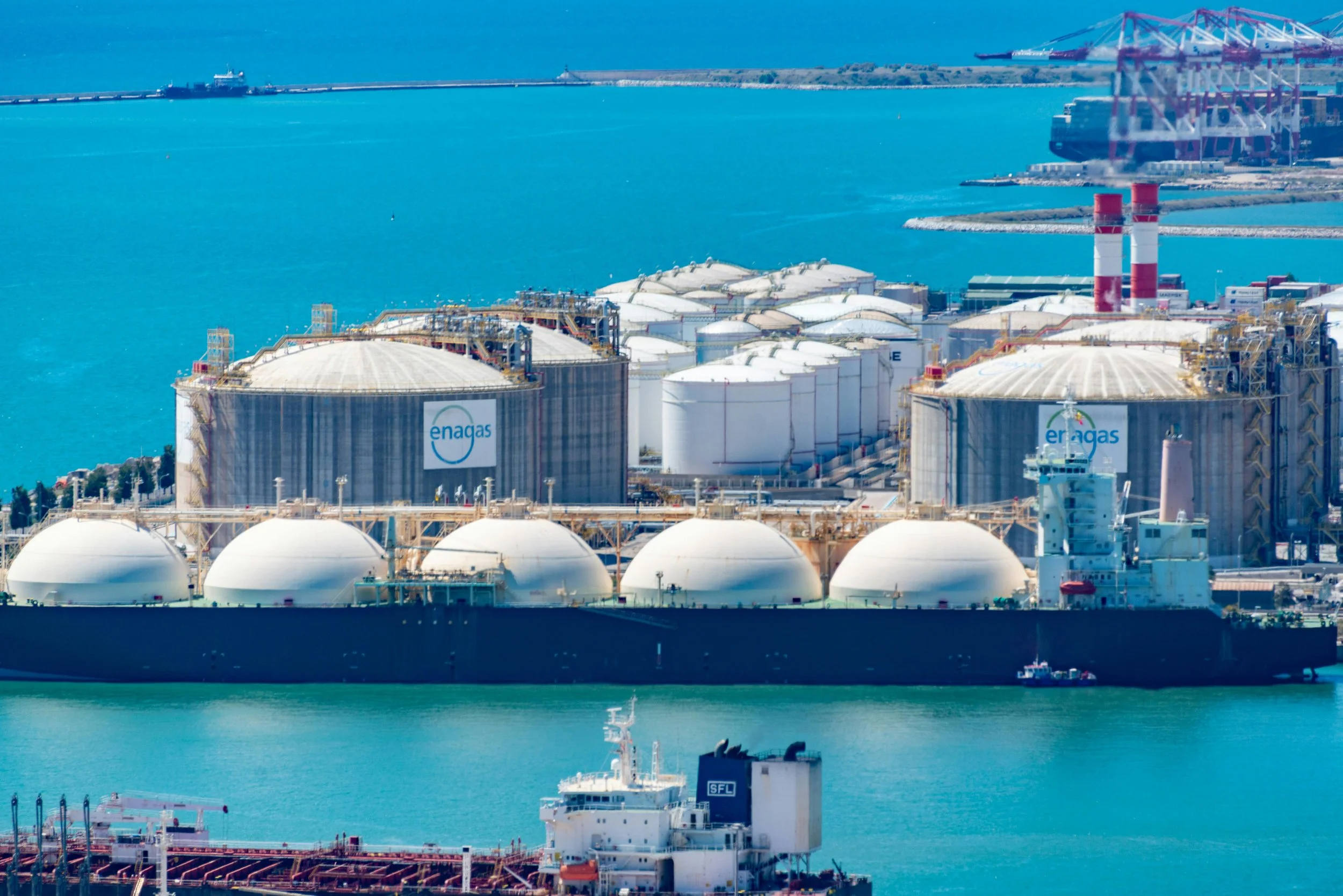
LNG tankers amplify these risks due to their operating profile. As the global LNG fleet expands, addressing the regulatory gaps identified below is essential to protecting marine ecosystems.
Policy Recommendations
The submission's core recommendation (para 19) calls for ballast water, biofouling, and invasive species modelling to be included in place-based environmental assessments and to inform the ongoing reform of the BWM Convention and biofouling framework. Based on the submission's findings, MARBEM identifies policy actions below.
-
Evidence:
Aquatic invasive species cost an estimated USD $345 billion globally, with North America bearing nearly half
Prevention is the most cost-effective strategy — eradication is nearly impossible once species establish
Submission recommendation (para 19):
Include ballast water, biofouling, and invasive species modelling in place-based environmental assessments alongside LNG facility construction and investment decisions. These assessments should be an ongoing component in the reform and refinement of the International Convention for the Control and Management of Ships' Ballast Water and Sediments (BWM Convention).
-
Evidence:
IMO recognises biofouling as an equal or greater invasion risk than ballast water
Legally binding framework not expected until 2029 at earliest
Even mild biofilm increases fuel consumption by 20%; heavy fouling by 85%
Submission recommendation (para 19):
Incorporate ballast water and invasive species findings into current decisions on a legally binding biofouling framework.
-
Evidence:
Full enforcement only achieved September 2024
Long-term treatment effectiveness data remains limited
Submission recommendation (paras 16, 20):
Prioritise continued research and monitoring through the Joint Group of Experts on the Scientific Aspects of Marine Environmental Protection – Ballast Water Working Group (GESAMP-BWWG) stocktaking exercise.
-
Evidence:
29–44% of treated discharges fail to remove organisms ≥50 µm
Treated water sometimes exceeds 100 viable organisms/m³
Submission finding (paras 12, 14) recommendation:
Strengthen compliance through enhanced crew training on system operation and maintenance, onboard spare parts, performance monitoring, adaptive equipment procedures, improved documentation, and standardised enforcement sampling.
-
Evidence:
LNG tankers can remain in ballast for 20+ days — IMO testing uses a 5-day window
Microbial regrowth is documented during extended transit; organism levels at discharge may reach or exceed pretreatment levels
Submission finding (para 17) · recommendation:
Extend BWMS test holding periods beyond 5 days to reflect actual voyage durations for vessels on long single-stop routes, such as LNG tankers.
-
Evidence:
IMO monitors only 3 indicator species (E. coli, Enterococcus, V. cholerae)
Research suggests this may underestimate the true risk, as the full range of pathogens remains poorly understood
Submission finding (para 13) recommendation:
Expand the scope of pathogen monitoring beyond current indicators.
-
Evidence:
Systems tested under limited conditions may not reliably meet discharge standards elsewhere
The compliance issue is discharge quality, not equipment installed
Submission finding (paras 11, 14) recommendation:
Ensure type-approval certificates clearly communicate performance limitations to shipowners and port State authorities.
LNG Tanker Risk Profile:
LNG tankers present an elevated ballast water risk profile due to a combination of factors:
Single-stop voyages: As with other tanker types, LNG tankers arrive at export terminals empty of cargo and under full ballast, concentrating high-volume discharge at each loading event.
Large ballast capacity: While oil tankers can carry significantly more, LNG tankers of 75,000–100,000 DWT typically exchange 30,000–60,000 MT per event — among the highest across commercial vessel types.
Extended holding times: Ballast periods can reach 20 days or more, well beyond the 5-day IMO test window.
Operational intensity: Ballasting occurs alongside cargo operations at terminals — a period of heightened operational intensity for tankers, increasing overall risk exposure
Recent research indicate that ballast water exchange frequency for representative LNG tankers is highly variable — median of 1 exchange every 4.3 port calls, across all port calls irrespective of import or export operations.
Case Study: Gulf of California
The submission uses the Gulf of California — a UNESCO World Heritage site and Important Marine Mammal Area — to illustrate how these regulatory gaps translate into concrete risk:
Saguaro Energía LNG could discharge up to 30 million MT (30 billion litres) of ballast water annually into a region with currently low commercial vessel traffic.
Invasive species are already causing harm: mass die-offs of native pen shells linked to invasive tunicates introduced via ballast water and hull fouling.
The United Nations has expressed "profound concern" over proposed GoC LNG terminals.
Preliminary findings from a forthcoming report note that Mexico has no specific national port-level provisions for ballast water management across its 118 ports, despite acceding to the BWM Convention in 2008.
MEPC 84/4/25 was submitted to MEPC 84 by CSC under Agenda Item 4: Harmful Aquatic Organisms in Ballast Water, commenting on the GESAMP-BWWG report (MEPC 84/4/3). MEPC 84 takes place April 27 – May 1, 2026 at IMO headquarters in London.